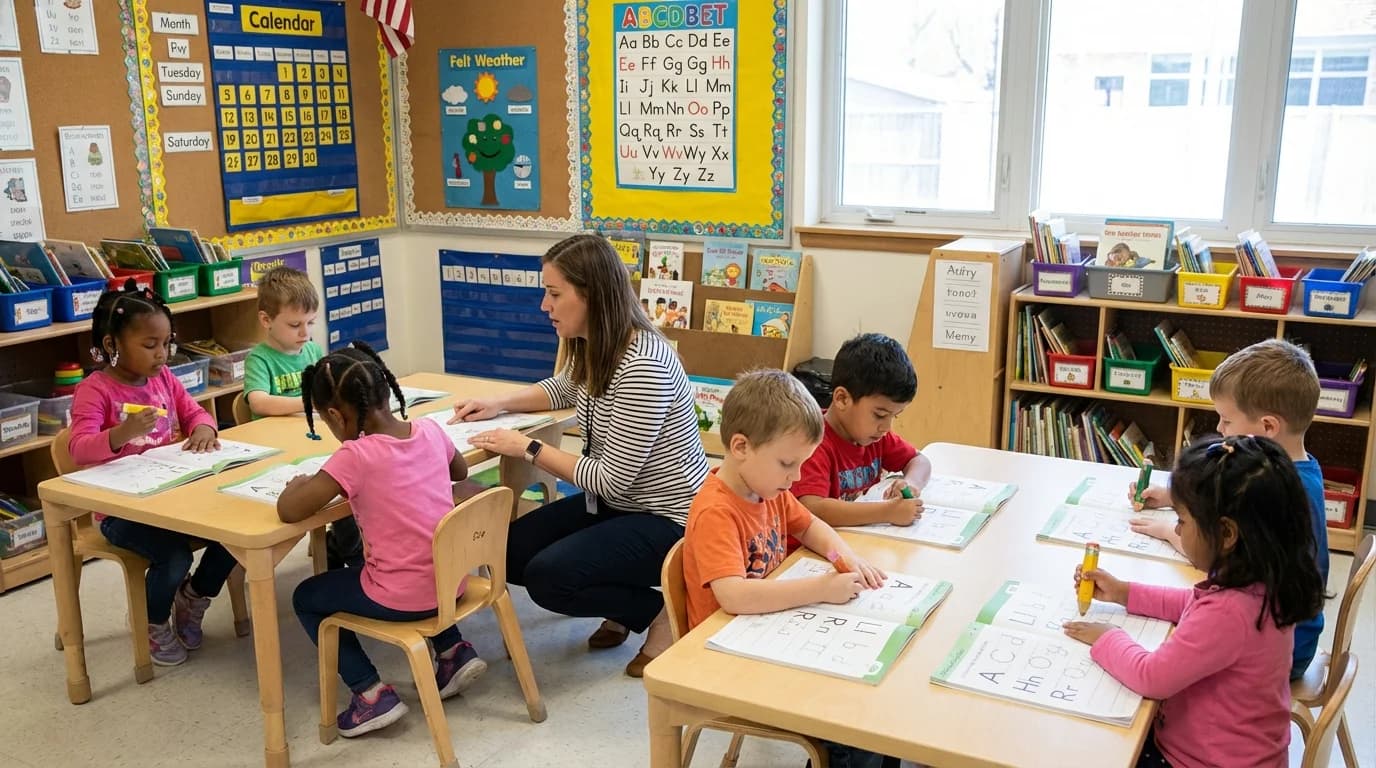
When your child approaches their fourth birthday, one of the most important decisions you will face as a Brooklyn parent is where they will attend Pre-K. New York City's Pre-K for All program has fundamentally changed the early education landscape by making high-quality pre-kindergarten available to every four-year-old in the city at no cost to families. For parents in Flatbush, East Flatbush, and surrounding neighborhoods, understanding how this program works, when to apply, and how to choose the right option can feel overwhelming.
This guide breaks down everything Brooklyn parents need to know about Pre-K for All, from the application process to the different program types, and explains how quality early childhood education at a program like Einstein Daycare prepares your child to thrive when they enter the Pre-K classroom.
What Is Pre-K for All?
Pre-K for All is New York City's universal pre-kindergarten program, launched in 2014 and operated by the New York City Department of Education (DOE). The program provides free, full-day pre-kindergarten to all four-year-old children who are New York City residents, regardless of income, immigration status, or neighborhood. There is no tuition, no fees, and no income requirements. If your child turns four by December 31 of the enrollment year, they are eligible.
The program serves approximately 70,000 children annually across the five boroughs, making it one of the largest publicly funded pre-kindergarten initiatives in the United States. Pre-K for All represents a fundamental commitment by the city to ensure that every child enters kindergarten with the social, emotional, and academic foundation they need to succeed.
It is important to distinguish Pre-K for All (for four-year-olds) from the city's 3-K for All program, which serves three-year-olds and is still expanding to reach universal availability. Both programs use the same application system, but they serve different age groups and have different availability levels across neighborhoods.
Types of Pre-K for All Programs
Pre-K for All is not a single program but rather a network of different program types, all of which meet DOE quality standards but differ in structure, hours, and setting. Understanding these distinctions is essential for choosing the right fit for your family.
DOE District Schools
Many New York City public elementary schools operate Pre-K for All classrooms within their buildings. These programs are staffed by DOE-certified teachers and follow the DOE school calendar. For families who already have older children in a particular elementary school, enrolling in that school's Pre-K can simplify logistics and build familiarity with the school community before kindergarten begins.
DOE school-based Pre-K programs typically follow the school-day schedule (approximately 8:20 AM to 2:20 PM, though exact times vary by school). Some schools offer extended-day options through partnerships with community organizations.
NYC Early Education Centers (NYCEECs)
NYCEECs are community-based organizations, including daycare centers, Head Start programs, and other nonprofit providers, that have been contracted by the DOE to deliver Pre-K for All. These programs meet the same instructional standards as DOE school-based programs but often offer more flexible hours, including extended-day and full-year options that better accommodate working parents' schedules.
For families who need care beyond the standard school day (before 8 AM or after 3 PM), or who need care during school breaks and summer months, community-based Pre-K programs are often the more practical choice. Some NYCEECs also serve younger children, allowing siblings to attend the same program.
Pre-K Centers
The DOE operates a small number of dedicated Pre-K Centers that serve only pre-kindergarten students. These centers are specifically designed and staffed for four-year-olds and can offer a focused, age-appropriate environment. Pre-K Centers are less common than school-based or community-based options but are worth considering if one is located conveniently for your family.
Charter Schools
Some charter schools in Brooklyn offer Pre-K for All seats through the DOE system. These programs follow the charter school's own educational approach while meeting DOE Pre-K quality standards. Charter school Pre-K programs are included in the MySchools application system alongside other options.
School-Day vs. Extended-Day: What Is the Difference?
One of the most important distinctions for working parents is the difference between school-day and extended-day Pre-K programs:
School-day programs operate for approximately six hours and twenty minutes, typically following the DOE school calendar (September through June, closed for holidays and school breaks). Hours are generally 8:00 or 8:20 AM to 2:20 or 2:40 PM, though exact times vary. School-day programs are primarily found in DOE district schools and Pre-K Centers.
Extended-day programs operate for up to ten hours per day, typically from 8:00 AM to 6:00 PM, and many run year-round rather than following the school calendar. Extended-day programs are primarily offered by community-based organizations (NYCEECs). For parents who work full-time, extended-day programs eliminate the need for separate before-care, after-care, or summer childcare arrangements.
Both school-day and extended-day programs provide the same core Pre-K instructional hours. Extended-day programs simply wrap additional care and enrichment time around the instructional block. There is no difference in educational quality between the two formats, as both must meet DOE standards for curriculum, teacher qualifications, and learning outcomes.
How to Apply: The MySchools Process
All Pre-K for All applications are submitted through MySchools, the DOE's centralized enrollment platform. Here is a step-by-step overview of the process:
Step 1: Research programs. Use MySchools to browse available Pre-K programs near your home or workplace. You can filter by program type (DOE school, NYCEEC, charter), schedule (school-day vs. extended-day), language, and other preferences. Visit programs in person whenever possible, as website descriptions cannot fully convey the classroom environment, teacher quality, and overall feel of a program.
Step 2: Create your application. You can apply online through MySchools, by phone by calling 311, or in person at a DOE Family Welcome Center. The application asks you to rank your preferred programs in order. You can list up to twelve choices.
Step 3: Submit by the deadline. The Pre-K application typically opens in early January and the priority deadline falls in late February or early March. Applications submitted by the deadline receive priority placement. You can still apply after the deadline, but available seats may be limited.
Step 4: Receive your offer. Offer letters are sent in spring, typically in April. You will receive an offer to one program based on your ranked preferences, available seats, and the program's admissions priorities (such as geographic zone or sibling preference).
Step 5: Accept and register. Once you receive an offer, you must accept it and complete registration with the program by the stated deadline. If you did not receive an offer to your top choice, you can join the waitlist for preferred programs while accepting the offer you received.
Application Timeline (Typical Year)
- November-December: Research programs, attend open houses and information sessions
- January: Application opens on MySchools
- Late February/Early March: Priority application deadline
- April: Offer letters sent to families
- May-June: Accept offer and complete registration
- September: Pre-K begins
For the most current timeline and deadlines, always check the DOE Pre-K enrollment page directly, as dates shift slightly from year to year.
Admissions Priorities: How Seats Are Assigned
When a Pre-K program receives more applications than it has seats, offers are made based on admissions priorities. These priorities vary by program type:
DOE district schools: Priority is given to children who live within the school's attendance zone, followed by children within the district, then the borough, then citywide. Siblings of current students also receive priority.
NYCEECs and Pre-K Centers: Community-based programs often prioritize children from the surrounding community district. Some may also give priority to currently enrolled children, siblings, and children with specific needs.
Charter schools: Charter Pre-K programs use a lottery system. Geographic proximity may or may not be a factor depending on the school's charter.
Because admissions priorities can significantly affect your chances of receiving an offer from a particular program, it is important to include a range of choices on your application, including some where you are likely to receive priority and some that represent reach preferences.
What to Look for in a Pre-K Program
Not all Pre-K for All programs are identical, even though they all meet DOE minimum standards. When researching and visiting programs, consider the following factors:
Curriculum approach: Ask what curriculum framework the program uses. Research-backed curricula such as The Creative Curriculum for Preschool provide a structured yet flexible approach that balances teacher-directed instruction with child-initiated exploration. At Einstein Daycare, we use the Creative Curriculum framework because it is evidence-based and aligned with how young children actually learn.
Assessment practices: Quality programs use ongoing, observational assessment tools such as Teaching Strategies GOLD to track each child's developmental progress across multiple domains. Ask how the program communicates assessment results to families.
Teacher qualifications: DOE-funded Pre-K teachers must hold a New York State teaching certification in early childhood education. Ask about teacher experience, ongoing professional development, and staff retention rates.
Classroom environment: Look for classrooms organized into distinct learning centers (blocks, dramatic play, art, library, science, math) with age-appropriate materials that are accessible to children. The physical environment should feel warm, organized, and intentionally designed. For more on what a quality classroom looks like, see our post on what Creative Curriculum means in practice.
Family engagement: Strong Pre-K programs actively involve families through regular communication, parent conferences, classroom volunteering opportunities, and family events. Ask how the program keeps parents informed about their child's daily experiences and developmental progress.
How Einstein Daycare Prepares Children for Pre-K Success
The children who transition most smoothly into Pre-K for All are those who have already experienced a structured, high-quality early childhood program. At Einstein Daycare, our toddler and preschool programs are specifically designed to build the skills, habits, and dispositions that four-year-olds need to thrive in a Pre-K classroom.
Social-emotional readiness: Children who have experience in group settings arrive at Pre-K knowing how to share materials, take turns, follow multi-step directions, manage transitions, and resolve conflicts with peers. These social-emotional skills are consistently identified by kindergarten teachers as the most important predictors of school success, more important even than knowing letters and numbers.
Language and literacy foundation: Through daily read-alouds, vocabulary-rich conversations, and exposure to print in every learning center, Einstein Daycare children develop the oral language skills and print awareness that are prerequisites for formal reading instruction in Pre-K and kindergarten.
Mathematical thinking: Our centers-based approach naturally integrates early math concepts, including counting, sorting, patterning, measurement, and spatial reasoning, into everyday activities. Children who have manipulated blocks, sorted objects by attribute, and compared quantities arrive at Pre-K with intuitive mathematical understanding.
Self-regulation and executive function: The ability to focus attention, control impulses, and persist through challenges, collectively known as executive function, develops rapidly during the toddler and preschool years. Quality early childhood programs deliberately cultivate these skills through structured routines, choice-making opportunities, and activities that require sustained engagement. Research from the National Association for the Education of Young Children confirms that children with stronger executive function skills perform better academically throughout elementary school.
Independence and self-help skills: Pre-K classrooms expect children to manage basic self-care tasks including using the bathroom independently, washing hands, putting on and removing outerwear, opening food containers, and cleaning up after activities. At Einstein Daycare, we intentionally build these skills from the toddler years onward, so children enter Pre-K confident and capable.
Navigating the Transition from Daycare to Pre-K
Even children who are well-prepared for Pre-K may experience some adjustment during the transition. A new building, new teachers, new classmates, and a new routine can feel overwhelming for a four-year-old. Here are strategies to support a smooth transition:
Visit the new program before the first day. Most Pre-K programs host orientation sessions or open classroom visits in late August or early September. Take advantage of these opportunities to familiarize your child with the physical space, meet their teacher, and establish a sense of safety before the official start.
Establish the new routine early. In the weeks before Pre-K begins, gradually shift your child's wake-up time, meal times, and bedtime to align with the Pre-K schedule. Predictable routines reduce anxiety and help children feel in control.
Talk positively but honestly. Share excitement about Pre-K without over-promising. Acknowledge that new things can feel a little scary and express confidence in your child's ability to handle it. Avoid dismissing their concerns with phrases like "There's nothing to worry about," which can make children feel their emotions are not valid.
Maintain connections. If your child is leaving a daycare program to attend Pre-K, help them maintain friendships with former classmates through playdates and social gatherings. The loss of familiar relationships can be a significant source of Pre-K transition stress.
Frequently Asked Questions About Pre-K for All
Is Pre-K for All really free? Yes. There is no tuition, no fees, and no income eligibility requirement. Extended-day programs are also free, though some may charge for meals or optional enrichment activities.
Is Pre-K mandatory in New York City? No. Pre-K attendance is not legally required. However, participation is strongly encouraged, and research consistently shows that children who attend quality Pre-K programs enter kindergarten better prepared academically and socially.
Can I apply if I am undocumented? Yes. Pre-K for All is available to all New York City residents regardless of immigration status. The application does not ask about immigration status, and no Social Security number is required for the child.
What if my child has special needs? Children with Individualized Education Programs (IEPs) can access Pre-K for All, and many programs offer integrated settings where children with and without disabilities learn together. The DOE's Committee on Preschool Special Education can help identify appropriate placements. Contact the DOE directly or call 311 for guidance.
What if I miss the application deadline? You can still apply after the priority deadline, but you will be placed based on remaining availability rather than your ranked preferences. Apply as early as possible for the best selection.
For additional questions about early childhood programs and financial assistance, our guide to childcare vouchers and subsidies for Brooklyn parents covers the full range of support available to families in our community.
Investing in Your Child's Educational Foundation
Pre-K for All is a remarkable resource for Brooklyn families, providing every four-year-old with access to structured, high-quality early education at no cost. But the learning that happens before Pre-K matters enormously. Children who enter Pre-K with a strong foundation in social-emotional skills, language, and self-regulation, built through quality infant, toddler, and preschool experiences, are positioned to get the most out of everything Pre-K has to offer.
At Einstein Daycare, we see our role as building that foundation. From the moment a child enters our infant room through their final year before Pre-K, every interaction, activity, and learning experience is designed to prepare them for the next step in their educational journey.
Build Your Child's Pre-K Foundation at Einstein Daycare
Einstein Daycare's Creative Curriculum programs for infants, toddlers, and preschoolers are designed to build the skills and confidence your child needs to thrive in Pre-K for All and beyond. We serve families throughout Flatbush, East Flatbush, and Crown Heights from our location at 900 Lenox Rd, Brooklyn, NY 11203. Schedule a tour today or call us at (718) 618-7330 to learn how we prepare Brooklyn's youngest learners for lifelong success.